


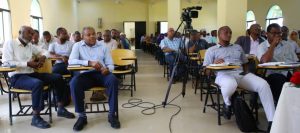
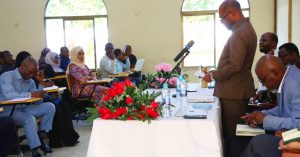
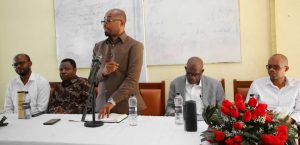
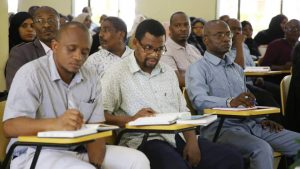
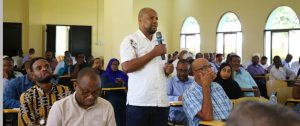
The Deputy Vice-Chancellor for Academic, Research and Consultancy (DVC–ARC) at the State University of Zanzibar, Prof. Abdi Talib Abdalla, convened his inaugural meeting with the University’s academic staff and laboratory support personnel following his recent appointment. The meeting was held on 11th December 2025 in the assembly hall of the Computing Building at the Tunguu Campus.
In his address, Prof. Abdalla engaged the University community on a wide spectrum of issues central to SUZA’s strategic direction and the sustained advancement of its academic excellence.
He commenced by acknowledging the dedication and commitment of academic staff, reaffirming the University leadership’s resolve to strengthen SUZA’s academic mission. He observed that the University is entering a new phase of institutional transformation, one that necessitates renewed emphasis on academic excellence, research productivity, professionalism, and robust accountability mechanisms. Realising this vision, he stressed, requires collective responsibility in delivering high-quality teaching, impactful research, and meaningful community engagement.
Prof. Abdalla highlighted the imperative of revitalising a vibrant academic culture grounded in integrity, punctuality, discipline, and ethical professional conduct. Staff were reminded of the need to maintain exemplary standards in teaching, supervision, communication, and workplace etiquette, including adherence to established permission protocols. He further reiterated SUZA’s commitment to expanding its postgraduate portfolio, with particular focus on strengthening Master’s and PhD programmes.
Addressing examination-related matters, the DVC–ARC called for unwavering compliance with examination regulations, security protocols, moderation procedures, and institutional timelines. With regard to research, consultancy, and collaboration, he urged academic staff to cultivate a stronger research culture through active grant acquisition, rigorous proposal development, and interdisciplinary collaboration aligned with national development priorities. Consultancy, he emphasised, must reclaim its central role as a core institutional mandate, with faculties and institutes expected to proactively initiate consultancy and community-oriented projects. Senior academics were encouraged to lead mentorship initiatives and reinforce research groups within their respective units.
Prof. Abdalla further encouraged staff to pursue academic advancement through high-quality publications, demonstrable community impact, and strong academic leadership. He underscored that promotion processes must remain merit-based, transparent, and mutually beneficial. He also stressed the importance of enhancing SUZA’s visibility through scholarly publications, conference participation, policy engagement, and media contributions, urging faculties and institutes to document and publicise their achievements in collaboration with the Public Relations Office.
On digital transformation, he reminded staff to adhere to established administrative workflows—progressing from Heads of Department to Deans/Directors, and subsequently to the DVCs—to ensure order, efficiency, and accountability. He emphasised the critical role of SUZA’s digital systems, including the LMS and SUZIMS, in supporting contemporary academic operations. Additionally, he encouraged faculties and institutes to diversify revenue streams through professional courses, consultancy initiatives, training programmes, and strategic partnerships, ensuring alignment with SUZA’s academic mission and responsiveness to community needs.
In conclusion, the DVC–ARC called for strengthened collaboration, teamwork, and institutional cohesion rooted in mutual respect and constructive communication.
He invited staff to share ideas and challenges that could support SUZA’s ongoing transformation. He closed with a firm reminder: Hatutamuonea mtu lakini hatutamkingia kifua mtu—kila mtu atekeleze wajibu wake. Every member of the academic community, he affirmed, has a critical role in advancing SUZA’s mission and shaping its future through excellence in teaching, research, consultancy, and community service.